Understanding Supplement Labels, Section by Section
A supplement label packs a lot of information into a small space. Once you know what each panel is for, reading one becomes quick and satisfying.
A tour of the panels, terms and symbols you will see on any bottle.
Why label literacy is a useful skill
Supplements line shelves in every store aisle and online store, and the bottles all look different. Yet nearly every one follows the same basic layout. Learning that layout means you can pick up any bottle, find the facts in under a minute and feel confident about what you are holding.
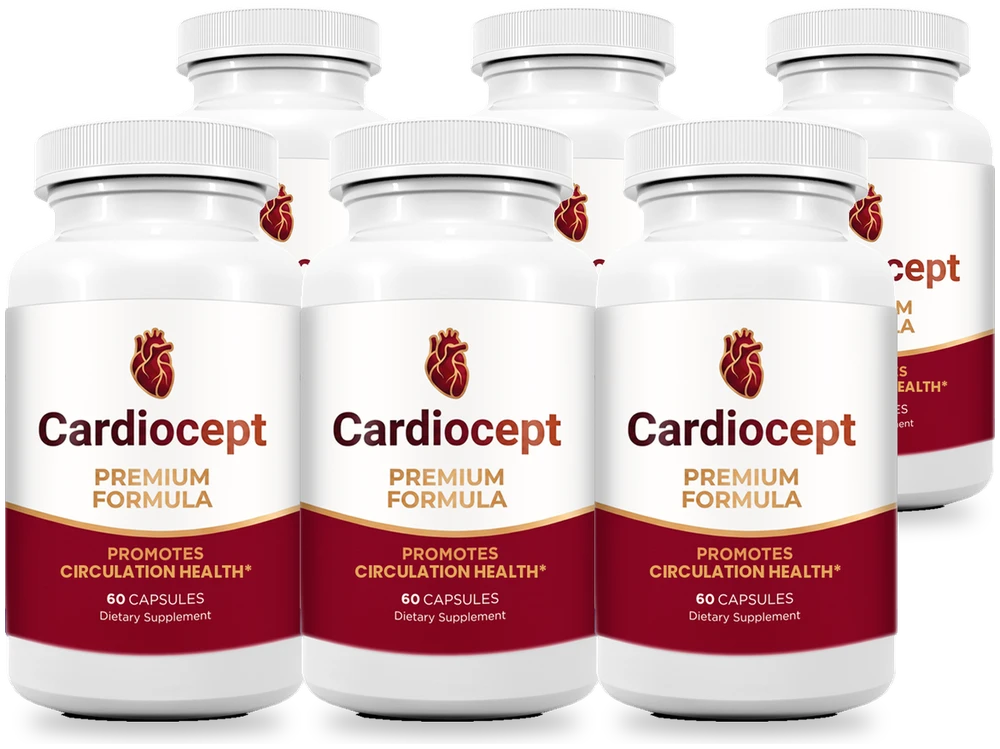
Let us walk through a typical label from front to back, using the Cardiocept bottle as a friendly example: a white bottle with a crimson label reading "Premium Formula - Promotes Circulation Health*."
The front panel
The front of the bottle is the headline. You will find the product name, a short description of what it is for, and the count. It lists 60 capsules. The front is also where you see the asterisk after a statement. That little star is a signal to look for the supporting statement elsewhere on the label, and it appears because supplement statements describe how a formula supports normal body structure and function rather than anything else.
Here the headline speaks to supporting healthy circulation, which fits the positioning of a daily formula for adults who want to support vascular wellness and cardiovascular wellness as part of an active lifestyle.
The Supplement Facts panel
This boxed panel is the core of the label. It usually contains these pieces in a consistent order:
- Serving size: the amount to take at one time, such as one capsule.
- Servings per container: how many servings the bottle holds. With one capsule daily, a 60-capsule bottle gives 60 servings, or a 30-day supply when taking one capsule per day as directed.
- Ingredient list with amounts: the named ingredients and the quantity per serving.
- Percent Daily Value: shown for nutrients that have an established reference amount.
Read the serving size first, since every other number on the panel is tied to it. If you would like to browse an official explanation of this layout, the NIH Office of Dietary Supplements fact sheets are an excellent reference.
Decoding ingredient names
Ingredient names can look intimidating at first glance, but there is a pattern. Many amino acids are listed together with a partner compound that tells you the form used. The formula features three named ingredients: L-citrulline DL-malate, L-arginine alpha-ketoglutarate and L-arginine HCL.
- The "L-" prefix describes a particular structural form of the amino acid.
- "DL-malate" and "alpha-ketoglutarate" are partner compounds paired with the amino acid.
- "HCL" is short for hydrochloride, another common pairing format for amino acids.
Amino acids are the building units of protein, which is why they occur naturally in foods such as eggs, fish, poultry, dairy, beans and nuts. You can explore this in general terms on our ingredients page and in the article on amino acids in everyday wellness.
Below the main panel you may see a line for "other ingredients." In a capsule product this usually covers the shell itself and any supporting components that help the formula flow or stay stable in the bottle. It is simply an itemized list of everything else that goes into the finished capsule. If a product has a long list, reading it slowly from the top costs only a moment.
Directions and the manufacturer line
Two more items round out a good label. The first is the directions: how much to take and when. The directions are straightforward: take one capsule daily with a glass of water, about 8 oz, ideally in the morning. This is intended for adults 18 and over.
The second is the manufacturer or distributor information, often near the bottom. Cardiocept is made in the USA in an FDA-registered, GMP-certified facility. GMP stands for Good Manufacturing Practice, a set of production standards, and you can read more in our guide to quality and manufacturing standards.
A quick checklist for any bottle
Keep this short list in your head the next time you shop:
- Find the serving size and servings per container, then do the day-count math.
- Read each named ingredient and its partner compound.
- Check the directions and the intended age group.
- Look for the manufacturing details and facility standards.
- Confirm the return or guarantee terms before you order.
On that last point, Cardiocept is a one-time purchase with no subscription and a 60-day money-back guarantee, so you can try the routine with your confidence intact.
Put your label skills to work
Now that you can read a label like a pro, compare what you have learned with the real thing. Visit the Cardiocept order page, pick the bottle count that suits your routine and see how clearly the formula and directions line up when your own bottle arrives.